Before 1930
Built before 1930: bungalows, crawlspaces and a century of repairs
A 1920s bungalow's plumbing has usually been repaired more than once, so expect a patchwork: often galvanized water pipe, cast iron drains and a clay sewer line under a raised floor, often with little paperwork.
From the Plumbing Across L.A. desk. Updated .
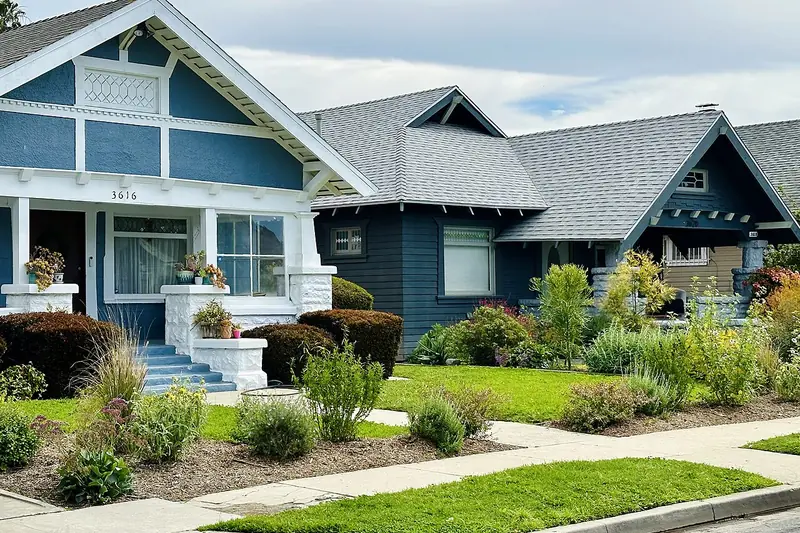
By the time you buy one of these houses, a hundred years of owners and plumbers have left their marks in it. What's behind the plaster is rarely on paper.
What was usually built before 1930
The city's own SurveyLA study treats 1880 to 1930 as its early residential period. Within it, you find Victorians like those in Angelino Heights, dated 1886 to 1925, and the Craftsman bungalows that dominate older parts of the region. Pasadena's Bungalow Heaven has most of its bungalows from 1905 to 1920; Long Beach's Rose Park from 1910 to 1922.
The 1920s added Spanish Colonial Revival and the bungalow court, a group of small units around a walk. Hollywood's surviving examples date from 1921 to 1925. These courts matter here, since a single line may serve several households.
What the pipes usually were
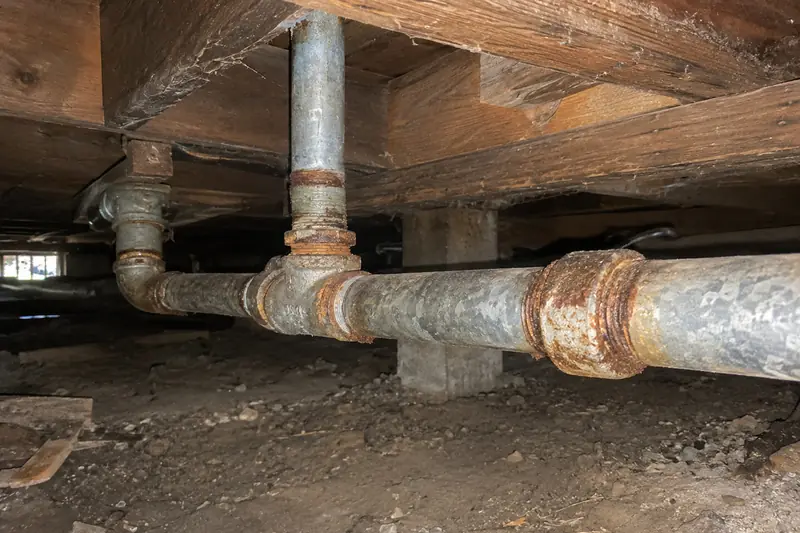
Water lines were often galvanized steel, which East Bay MUD says was commonly used before the 1960s. That is a Bay Area utility, but the pipe is the same. Its zinc coating wears away, the iron rusts, and deposits narrow the bore, which shows up as low pressure and discolored water.
Copper tube barely enters this era: the trade group Copper Development Association dates its earliest records of copper in homes to 1927. Drains were commonly cast iron, with clay in the ground out to the street, and any of it may since have been swapped for something newer. The year is a clue, not proof, and a re-plumb could have happened in any decade. Galvanized pipe in old houses and cast iron and clay drains go further.
What to check first this year
- Find the main water shutoff and make sure everyone in the house knows where it is. Don't force a stuck valve; note it for a plumber.
- Look at exposed pipe where it enters the house and at the water heater, and write down what you see. Don't cut, sand or scrape old pipe.
- Run the cold water after it has sat. LADWP's advice on lead at the tap applies to old fixtures and solder: flush for 1 to 2 minutes, and drink only cold water.
- Confirm that the water heater is strapped. If the gas connector or vent looks stressed, leave it alone and call a pro.
- Consider a sewer camera inspection before trouble starts. In the City of Los Angeles, LA Sanitation's rebate covers up to $300, subject to its rules and funds.
- Ask LADBS what permits are on file for the address, and don't take silence as evidence nothing was done.
Which jobs are licensed
Repiping, sewer lateral work, gas lines and seismic gas valves are for licensed contractors, with permits where required. Check the C-36 license before you pay anyone. The crawlspace under many of these houses is also not a place to go in a heat wave.
By part of town
- Hills & Eastside Victorians and Craftsman houses in Echo Park and Highland Park, some on slopes.
- Pasadena, Glendale, Burbank Bungalow Heaven's Craftsman houses, on Pasadena's own water.
- Westside & Beach Santa Monica's 1903 to 1915 bungalows on Third Street, and early Venice.
- South L.A. & Inglewood Watts grew quickly in the early 1920s; records for individual blocks are thinner.
- Long Beach & Harbor Craftsman districts from the 1910s and early 1920s.
- The Valley Fewer houses this old, but Van Nuys dates from 1911.
Questions that come up
Does a 1920s house have lead pipes?
Not necessarily in the service line, if you are on LADWP: its inventory found none. Other utilities keep their own lists. Fixtures and old solder are the more likely sources, and interior pipe isn't covered by that inventory.
Should an old house be repiped just because of its age?
Age alone doesn't decide it. Low pressure, brown water and repeated leaks are better reasons, and a licensed plumber can look at what is actually there.
Is a raised floor good news for plumbing?
It usually makes pipes easier to reach than in a slab house, though old crawlspaces have their own hazards. Let a pro go in if you are unsure.
What this was checked against
- Early residential period: SurveyLA context
- Victorian and court dates: Conservancy listings
- Bungalow dates: American Planning Association
- Galvanized pipe behavior: East Bay MUD
- Copper in homes from 1927: Copper Development Association
- Lead sources in the home: LADWP FAQ
Sources read in November 2026. Rules and prices change: check the agency before you act.