Strapping a water heater for an L.A. earthquake
Water heater strapping in California is state law: new, replacement and existing residential heaters must be braced, anchored or strapped against earthquake motion, and a seller must certify it in writing.
From the Plumbing Across L.A. desk. Updated .
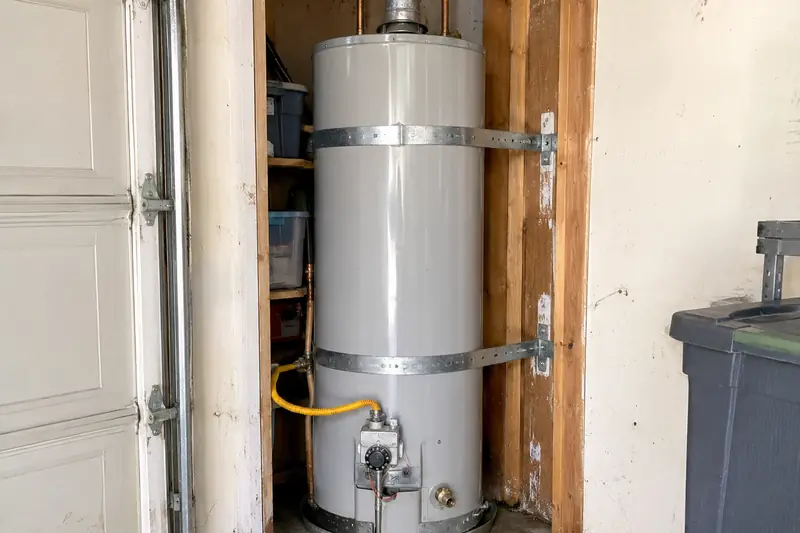
A tank of hot water is heavy and connected to gas or power, a water line and often a vent. The point of the straps is to keep the tank from falling or sliding sideways when the ground moves.
What does California law say about water heater strapping?
Health and Safety Code section 19211 requires all new and replacement water heaters, and all existing residential ones, to be braced, anchored or strapped to resist falling or horizontal displacement from earthquake motion. At minimum, that means following the California Plumbing Code or a local modification of it.
The law defines "water heater" as a standard heater of not more than 120 gallons for which a preengineered strapping kit is readily available. It also says the seller of real property containing a water heater must certify compliance to the buyer in writing. That can go in existing sale documents, and it sits alongside the seismic gas valve rule if you're selling in the City of Los Angeles.
What does LADBS ask for on water heater straps?
LADBS publishes a one-page guide, How to Brace Your Water Heater, bulletin P/PC 2023-003, effective January 1, 2023. It says the lower strap goes at least 4 inches above the control unit. California Plumbing Code practice puts straps in the top and bottom third of the tank.
Read the bulletin itself before work starts, because it is the City's document and this is only a summary. If you live in Pasadena, Santa Monica, Burbank, Long Beach, Glendale or Inglewood, ask that city's building department.
| Look for | Why it matters |
|---|---|
| Two straps, one in the top third and one in the bottom third | California Plumbing Code practice |
| Lower strap at least 4 inches above the control unit | LADBS bulletin |
| Straps running to wall studs, using an approved kit | A strap fixed to thin material won't hold much |
| Plumber's tape or wire used as a strap | Ask a licensed plumber to check it against the kit requirements |
If you can't tell what's behind the wall, or the heater is in a tight closet, call a licensed plumber. Strapping is the small part of this. The connections around it are what matter most.
Does replacing a water heater need a permit?
Generally yes, in the City of Los Angeles. LADBS requires a plumbing permit to replace a gas water heater in a single-family home, unless the work is done by a contractor registered with LADBS as a Certified Licensed Contractor. That exemption reaches only a like-for-like swap: same gallons, same BTU rating, same vent size. The permits page has the details, and a C-36 license check should come first.
A heater change is a good time to look at the straps. The new tank may differ in height or diameter from the old one, so the old straps may not fit the new tank.
What temperature should a water heater be set to?
The Consumer Product Safety Commission urges 120°F. Most injuries and deaths from tap water scalds are among older people and children under five. Its burn times for most adults are stark.
| Water temperature | Exposure time |
|---|---|
| 150°F | 2 seconds |
| 140°F | 6 seconds |
| 130°F | 30 seconds |
| 120°F | 5 minutes |
To see where you stand, CPSC suggests holding a candy or meat thermometer under a faucet first thing in the morning or at least two hours after water use. For gas heaters, CPSC says to call your gas company for instructions because thermostats differ. If you have any doubt about the controls, ask SoCalGas or a licensed plumber. Always hand-test water before bathing a child.
What should you do with the heater right after a quake?
If you smell or hear gas at any point, leave the house first and phone 911 and SoCalGas once you are outside. Only if there is no sign of gas, look at the heater from a distance. Later, read gas after an earthquake. If the tank has shifted, or the connector or vent looks pulled, leave everything alone and call a professional.
Heaters in hot garages and attics add another problem, so read attic and crawlspace heat before going up in summer. Don't go into an attic during a heat wave for any reason.
What this means by age of house
- Before 1930Heaters in these houses were often added later, in a porch, closet or garage. Plaster walls can make studs harder to find, so ask a plumber if you're unsure. See before 1930.
- 1930s–1940sA heater may have been replaced several times in the same spot. Check that the straps match the current tank, not an earlier one.
- 1950s–1960sMany postwar heaters sit in garages or closets. Older straps may have been added in a hurry for a sale, so check both positions.
- 1970s and newerDon't assume a newer house is compliant. Check for two straps in the right places, especially if a heater was replaced without a permit.
Questions that come up
Does the strap rule apply to a renter's unit?
The law covers existing residential water heaters, and it is the owner's job. It also says an owner of residential rental property can't evict someone on the basis that eviction is needed to comply.
Is a tankless heater covered?
The law's definition is a standard heater of up to 120 gallons with a preengineered strapping kit readily available. A wall-hung unit is mounted differently, so ask LADBS or your plumber.
Does an unstrapped heater stop a sale?
The issue is the written certification. A seller has to certify compliance to the buyer, so have straps checked before listing.
Would wood blocks or tape around the heater do instead?
The law asks for bracing that meets the plumbing code, and LADBS's bulletin shows what it accepts. Use an approved kit or call a licensed plumber.
Is turning a gas heater down to 120°F a homeowner job?
CPSC says to call your gas company for instructions for gas heaters, because thermostats differ. Do that first, and call a professional if the control looks damaged.
Who handles this
- LADBSBracing bulletin and heater replacement permits for city addresses
- CSLBChecking a plumber before you pay anything
- SoCalGasSuspected leaks and gas appliance questions
- Long Beach UtilitiesRuns gas in Long Beach and Signal Hill instead
What this was checked against
- Health and Safety Code section 19211: Public.Law copy of the state code
- How to Brace Your Water Heater, P/PC 2023-003: City bulletin from LADBS
- Heater swaps under the certified contractor program: LADBS bulletin
- Avoiding Tap Water Scalds, Publication 5098: U.S. Consumer Product Safety Commission
Sources read in November 2026. Rules and prices change: check the agency before you act.