After an earthquake: leave the gas alone unless it is leaking
If you smell or hear gas after an earthquake, get everyone out, touch no switches, and call 911 and SoCalGas from outside. Shut off at the meter only if leaking and safe. No sign of a leak? Leave it on.
From the Plumbing Across L.A. desk. Updated .
The instinct after a hard shake is to go straight to the meter. SoCalGas says not to. Once gas is off at the meter, only a SoCalGas field employee may turn it back on, and after a large quake that wait can run a long time.
The guidance below comes from SoCalGas material reprinted by Azusa Light & Water and a SoCalGas release from 2020. Both are older documents, so check SoCalGas's current emergency page when you can, well before you need it. If anything there differs from this page, follow SoCalGas.
What should you do if you smell gas after an earthquake?
Leave. Everyone goes outside first, before you think about the meter, a phone or a wrench. In Long Beach and Signal Hill, your gas utility is Long Beach Utilities, not SoCalGas: same steps, and you call 911 and Long Beach Utilities from outside.
Signs of a leak are the smell of gas or the sound of it escaping, or anything else that looks like gas getting out. You don't need to be sure. Treat a suspicion as a leak and get out.
When should the gas be shut off at the meter?
Only if you smell or hear a leak, everyone is already out, and it is safe to reach the meter. If you have any doubt, stay away and wait for SoCalGas or the fire department. Getting people out matters more than getting the gas off.
If those conditions are met, SoCalGas describes the method this way: use an adjustable wrench 12 inches or larger and give the meter valve a quarter-turn, in either direction, until it sits crosswise to the pipe.
That is the only gas valve this paper describes. We give no instructions for valves on appliances or gas lines inside the house, and none for burners or pilots. Leave those to SoCalGas or a licensed plumber.
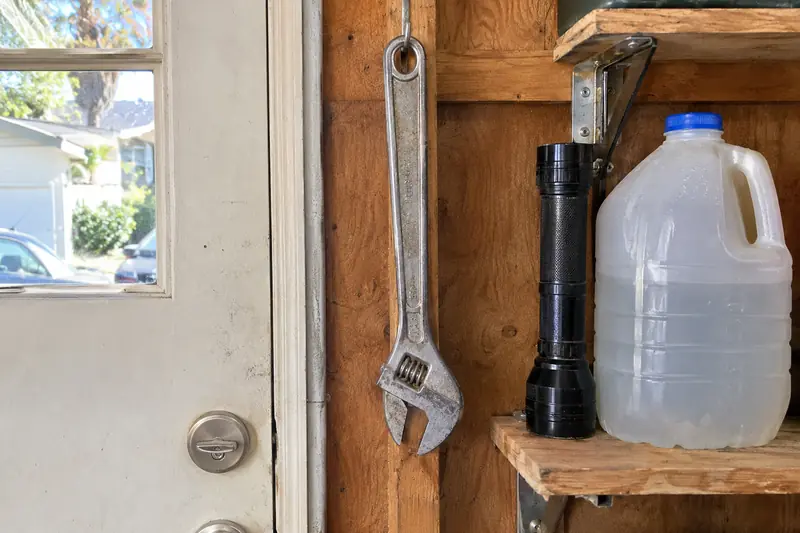
Decide where the wrench lives before there is an emergency. SoCalGas says to keep it with your emergency supplies, near your building exit or beside the meter valve, but not stored on the meter or on gas piping.
| What you find | What to do |
|---|---|
| No smell, no sound, no other sign | Leave the gas on |
| Smell, sound or other sign of a leak | Everyone out, then call 911 and SoCalGas from outside |
| Gas already off at the meter | Leave it off and call SoCalGas |
| A seismic valve has closed | Don't reset it. Call SoCalGas or a licensed professional |
| Water heater or its gas connector has moved | Leave it alone and call a professional. If you smell gas, get out |
Who turns the gas back on after an earthquake?
SoCalGas does. If the gas has been shut off at the meter, leave it off. Interior piping and appliances must be inspected for damage before service comes back, and SoCalGas says only its field employees may turn on the meter.
Don't relight anything yourself. SoCalGas handles the pilots. Your plumber or heating contractor may need to make certain repairs first, so check any license using our C-36 steps.
Plan for a wait. SoCalGas warns that response may be delayed after a quake, depending on how many customers are without service. This is the plain reason not to shut off a line that isn't leaking.
Some houses have an automatic valve on the outside piping. In the City of Los Angeles, seismic gas shutoff valves are required at sale and on larger permitted work. If one has closed, it stays closed until a professional deals with it.
How does water fit in after a quake?
Water is separate from gas, and it has its own shutoff. LADWP calls the main one the wheel valve and says it usually sits near the front hose faucet, in line with the meter. Find yours this week, while nothing is wrong.
If a water pipe breaks after a quake and you can reach that valve safely, closing it stops the flow into the house. Any sign of gas changes the order: leave first, and let the water run.
After a major quake, LADWP says supply may be disrupted or it may issue a boil water notice. It suggests storing at least 1.0 gallon per person per day, with water for pets on top of that. Follow your utility's notice, because different notices mean different things. A Do Not Drink notice after a wildfire is not the same as a boil notice, and boiling won't fix it.
Your water heater should already be strapped. That won't stop every problem, but it is the piece of quake readiness you can sort out on an ordinary weekday.
Questions that come up
Is shutting off the gas a sensible precaution before leaving town after a big quake?
SoCalGas's guidance is no. Shutting off is for a leak, and only when it is safe. If you turned it off anyway, leave it off and call SoCalGas.
What about the valve behind the stove or the water heater?
This paper doesn't give instructions for those. If you smell gas, go outside and call. If you don't, leave them for SoCalGas or a licensed plumber.
Is it fine to call SoCalGas from the kitchen?
No. If you suspect a leak, make the call from outside, away from the house.
The neighbors have gas back. Why not turn yours on?
No. Gas shut off at your meter stays off until a SoCalGas field employee turns it on, after the piping and appliances are checked.
The pilot went out in the quake and there's no smell. Is relighting fine?
Leave it. SoCalGas lists relighting among the things it does when it restores service. Call SoCalGas and ask.
Who handles this
- SoCalGasAny suspected leak, and every gas restart after a quake
- Long Beach UtilitiesThe same jobs in Long Beach and Signal Hill
- LADWPSupply problems and water notices where it serves; other cities run their own
- LADBSPermits for valves and heaters within L.A. city limits
What this was checked against
- Gas meter safety after an earthquake, SoCalGas text: Azusa Light & Water
- ShakeOut preparedness tips, 2020 release: SoCalGas via Sempra, archived
- Current safety and preparedness pages: SoCalGas site
- Wheel valve location and emergency water storage, FAQ page: LADWP site
Sources read in November 2026. Rules and prices change: check the agency before you act.