1950s–1960s
Built in the 1950s and 1960s: slabs, copper and the Valley boom
A 1950s ranch house with a slab is the classic Valley case: often copper or galvanized supply lines, cast iron drains, and pipes you can't see, with the water heater in a closet or garage.
From the Plumbing Across L.A. desk. Updated .
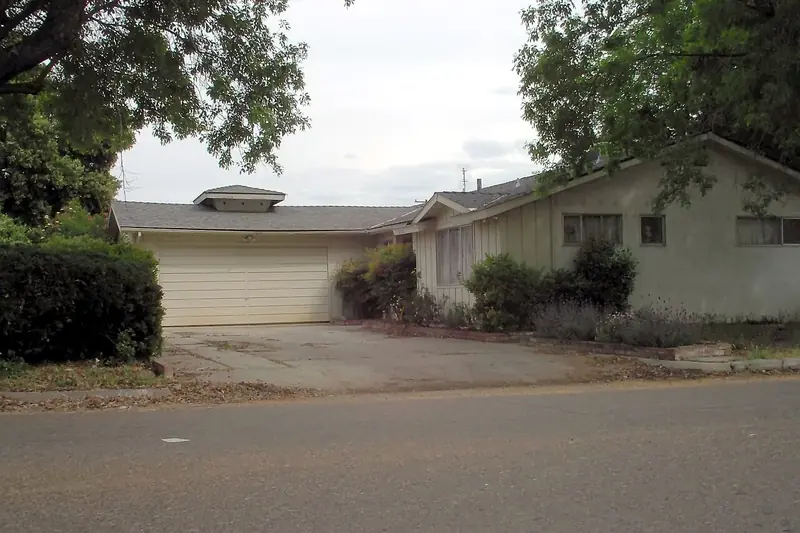
This is the era many people mean when they say "L.A. house." It's also the era when plumbing moved out of reach, into concrete, walls and attics.
What was usually built here after the war
Postwar Ranch houses spread fast over the Valley's open land. The LA Conservancy's four examples, spread across three Valley communities, all date to 1955 through 1959. Its entry on Westridge Park records one-story houses of 1957 and 1958 with two or three baths and a family room, in 17 floor plans, so even a tract isn't uniform below the surface.
Beyond the Valley, Burbank's report says the city's biggest growth came in the late 1940s and 1950s. On the Westside, the Palisades survey describes postwar infill into older subdivisions, with Palisades High opening in 1961.
What the pipes usually were
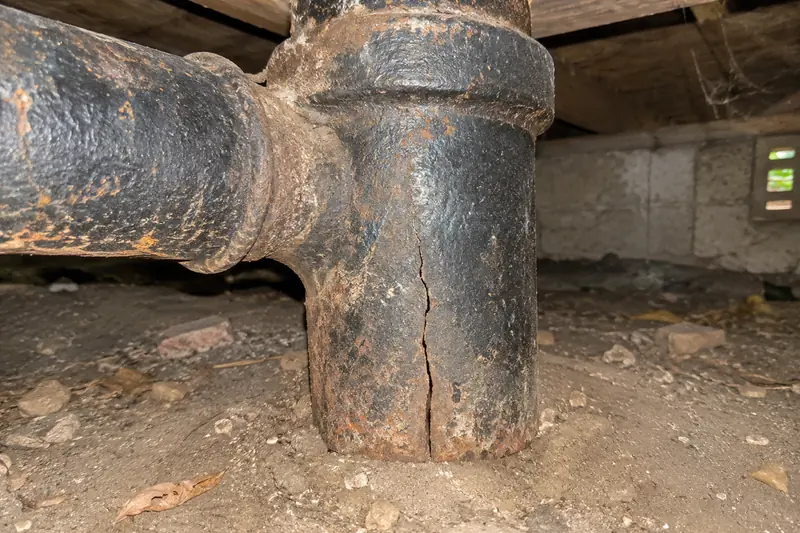
Supply lines in this era were mixed. East Bay MUD says galvanized was common before the 1960s, and copper had been around since the 1920s; which one a particular tract got is something only the house can tell you. In a slab house, lines commonly ran under or in the concrete, which is where slab leaks start. Drains were commonly cast iron, and the lateral often clay or another material of the day.
You may find the water heater in a closet, a garage or an attic, depending on the plan and later changes. LADWP says lead solder was banned in 1986, so copper joints from this period may contain it. Pipe can be replaced by any owner, at any time. Treat all of this as a starting point rather than a finding. Cast iron and clay drains covers the drain side.
What to check first this year
- Read your water meter with everything off, then again later. EPA says food coloring in a toilet tank shows a leak after 10 minutes. The high-bill leak check has the full routine.
- Feel for warm patches on a slab floor and note any unexplained sound of running water. Tell a plumber; don't open up the floor.
- Check the water heater's straps and look for rust at the base. Never cap or block a relief valve. CPSC suggests 120°F as the setting.
- Look in the garage or closet for a drain pan and whether it drains anywhere. Save the attic for a cool morning, or leave it to a pro: see attics and crawlspaces.
- Look at your lot size on your LADWP bill, since tier blocks depend on it.
Which jobs are licensed
Slab leak repair, repiping and lateral work belong with a licensed contractor, and in the City of Los Angeles replacing a gas water heater needs a permit unless the contractor is a Certified Licensed Contractor registered with LADBS. A sale triggers its own rules, including the seismic gas valve. Check the license first.
By part of town
- The Valley The center of it: Ranch tracts from Reseda to Woodland Hills.
- Pasadena, Glendale, Burbank Burbank's biggest growth came now; three utilities mean three sets of rules.
- Westside & Beach Palisades infill and postwar Westside blocks; fire rebuilding is changing some.
- Long Beach & Harbor Postwar blocks around the older core; check your year.
- Hills & Eastside Hillside houses of this age may have pumps and long laterals.
- South L.A. & Inglewood Mostly older, with infill from this period.
Questions that come up
Is every 1950s slab house going to leak?
No, and no agency publishes a rate. Some of these houses have had their lines re-routed already.
Does an old house need a new water heater to be strapped?
California's bracing rule covers existing residential heaters as well as new and replacement ones. Use an approved kit into wall studs, or hire a licensed plumber.
Where do these houses hide their shutoff?
Often near where the line enters the house, at the front or the side. Your meter box has a shutoff too, and that one may belong to your water utility.
What this was checked against
- Ranch dates and Westridge Park: Conservancy stories
- Burbank growth: Burbank's context report
- Leak checks: EPA WaterSense
- Scald setting: CPSC
- Water heater bracing: California Health & Safety Code 19211
Sources read in November 2026. Rules and prices change: check the agency before you act.