When Los Angeles requires a seismic gas shutoff valve
A seismic gas shutoff valve in Los Angeles is required before a building with gas piping is sold, and on alterations or additions valued over $10,000 when the project has gas. A licensed contractor installs it under an LADBS permit.
From the Plumbing Across L.A. desk. Updated .
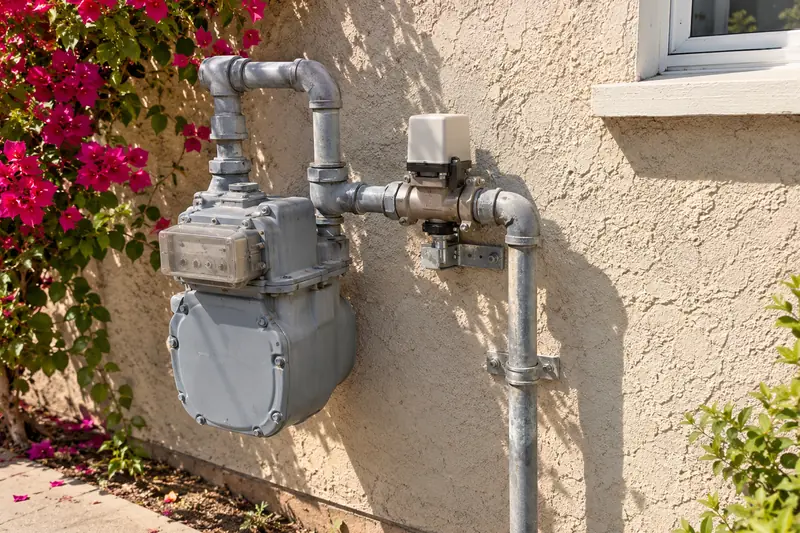
Most owners in the City of Los Angeles first hear about this valve from an escrow officer. The rule sits in the L.A. Municipal Code and is enforced through LADBS, the Department of Building and Safety, and it applies to commercial buildings as well as houses.
This page covers when the rule applies, who does the work and what to do if a valve has closed. For what to do about gas right after shaking stops, read gas after an earthquake.
When does Los Angeles require a seismic gas shutoff valve?
There are two triggers: selling the building and doing a large enough alteration. LADBS lists the valve among the requirements when selling residential and commercial buildings, and the rule reaches any building containing fuel gas piping.
The code accepts either a seismic gas shutoff valve (SGSOV) or an excess flow shutoff valve (EFSOV). The two are different devices, so ask your contractor which one is proposed and why.
| Trigger | What the rule asks |
|---|---|
| Sale of a building with fuel gas piping | Valve in place before the sale agreement, or before escrow closes if an escrow agreement is already signed |
| Sale of a condo unit | Valve for the piping that serves that unit |
| Residential alteration or addition over $10,000 | Valve when the project has gas; the requirement has applied to residential permits since the late 1990s |
| Commercial alteration or addition over $10,000 | Same idea, on permits first issued from September 1, 1995 |
The code section number is printed differently depending on where you look: 94.1216 in the online code library, 94.1217 on some LADBS forms. If a document cites either one, it most likely means the same seismic gas valve section. Ask LADBS if the difference matters to your paperwork.
Who is allowed to install a seismic gas valve?
A contractor licensed in the appropriate classification, under a permit, with an LADBS inspection. This is not a homeowner job, and this paper gives no installation steps.
The C-36 plumbing classification names "gas earthquake valves" among the health and safety devices it covers. Check the license before you sign, using the steps in hiring a C-36 plumber.
LADBS's rules put the valve on the downstream side of the utility meter, rigidly connected to the outside of the building. That means it is usually something you can look at from outside. Seeing a valve there doesn't tell you it was permitted, so look for the permit as well. The permits page explains how the City's process works.
How does the valve show up in a home sale?
It shows up on the Residential Property Report, the City document that sellers of residential property give to buyers. The report form has a checkbox for the valve. LADBS's page has listed a fee for the report; check the current amount there.
The valve is one of several items a seller meets at once. California separately requires a seller to certify in writing that the water heater is braced, and LADWP has its own fixture rules for a sale. Leaving the valve until the final week of escrow means booking a contractor and an inspection on a short clock.
If you are buying, a prior sale doesn't prove the valve is there or was permitted. Ask for the permit record and look at the meter.
Does the rule apply outside the City of Los Angeles?
This requirement is a City of Los Angeles rule, and this paper does not read it as a statewide one. Glendale, Long Beach, Burbank, Inglewood, Pasadena and Santa Monica are separate cities with building departments of their own, so ask yours what applies.
On your street
- The Valley Neighborhoods inside the City, such as Van Nuys or Reseda, fall under LADBS. Check your tax bill or permit history if you aren't sure of the city line.
- Pasadena, Glendale, Burbank Each is its own city with its own building department, so don't assume the Los Angeles rule carries over.
- Westside & Beach Santa Monica is a separate city, while Venice, Brentwood and Pacific Palisades are inside Los Angeles.
- Long Beach & Harbor Long Beach writes its own rules, while San Pedro and Wilmington answer to LADBS.
What doesn't the valve do?
It doesn't replace knowing what to do in a gas emergency, and it doesn't fix anything already wrong with the piping. A closed valve also tells you nothing about damage inside the house. Someone qualified has to deal with that before gas comes back on.
This paper also doesn't quote prices. Costs depend on the building and on the contractor, and we have no sourced figure worth printing. Get written bids and compare what each one includes, such as the permit and the inspection.
What this means by age of house
- Before 1930A sale triggers this rule whatever the year built. Gas piping in a house this old may have been changed many times, so tell your contractor about any work you know of.
- 1930s–1940sSame rule at sale. A sale or remodel in recent decades is a clue a valve may exist, not proof, so check for a permit.
- 1950s–1960sSame rule at sale. An addition or a large remodel in these houses may have triggered the $10,000 rule at the time, so ask LADBS what its records show.
- 1970s and newerA newer house has no exemption. If there is fuel gas piping, the sale rule still applies. If a house truly has none, ask LADBS how the rule reads for you.
Questions that come up
A closed valve, with no damage in sight: reopen it?
No. Leave it closed and call SoCalGas or a licensed professional. If you smell or hear gas, leave first and make the calls from outside.
May an owner buy a valve and fit it to meet the sale rule?
No. LADBS requires installation by a contractor licensed in the appropriate classification, with a permit and an inspection.
Selling a condo: does the whole building need a valve?
The code speaks of a valve for the piping serving the unit being sold. Your building's arrangement may complicate that, so ask LADBS and your homeowners association.
Does my water-only remodel trigger the $10,000 rule?
LADBS's question and answer ties the rule to projects that have gas and a valuation over $10,000. Ask LADBS at the permit stage how it applies to your scope of work.
Is the Residential Property Report the same as an inspection of the valve?
Don't treat it that way. It is a form the seller provides, and it has a valve checkbox. Ask for the permit record too.
Who handles this
- LADBSValve rules, permit and final inspection inside city limits
- SoCalGasReports of leaks, and restoring service at your meter
- Long Beach UtilitiesThe gas utility in Long Beach and Signal Hill, in place of SoCalGas
- CSLBLooking up the installer's license
What this was checked against
- Valve section of the Municipal Code: City of Los Angeles, via American Legal
- What sellers must do, under Getting Started: LADBS, city building agency
- Residential Property Report and general notes for single-family dwellings: LADBS forms library
- Gas earthquake valves in the C-36 wording: CSLB licensing page
Sources read in November 2026. Rules and prices change: check the agency before you act.