High LADWP bill: find the leak before you call anyone
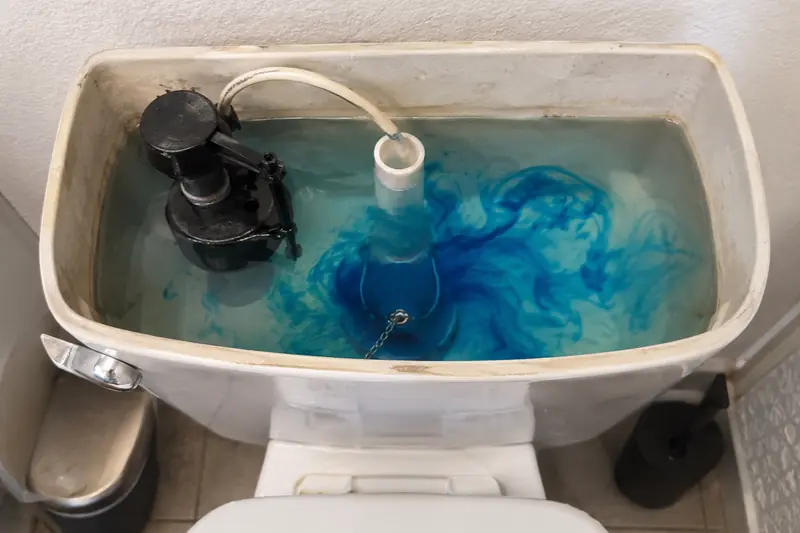
A high water bill in Los Angeles deserves a leak check before anything else: shut off all the water, watch the meter's leak gauge, then put food coloring in each toilet tank. It costs almost nothing.
From the Plumbing Across L.A. desk. Updated .
Start with the number that isn't dollars. Find the HCF on this bill and the same bill a year ago, because prices move every January and July while your use may not have moved at all. LADWP keeps your history under "Analyze My Usage" once you log in.
Is it a leak, or something on the bill?
It may be the bill: LADWP's own list of common causes includes higher use, the season, a misread meter, estimated use, a bill covering more than one period and an unpaid balance. Residential customers are billed every two months, so a bad stretch can run a while before you see it.
Read your own meter and compare it with the reading on the bill. If they are far apart, ask LADWP about the read before you hunt for a leak. EPA offers one rough national test for winter: a family of four using more than 12,000 gallons a month in January or February may have serious leaks. On an LADWP bill that is about 32 HCF over two months (24,000 ÷ 748 = 32.1).
How do you check for a leak at the LADWP meter?
Shut off every tap and appliance in and out of the house, then look at the meter. LADWP says movement on the leak detection gauge, with all the water off, means you have a leak.
- Find the meter. It is generally near the curb in a concrete or plastic box usually marked "water."
- Pry the lid with a large screwdriver through one of its holes, and look for insects or animals before reaching in. If the lid won't come up, leave it.
- Turn off the water everywhere, including sprinkler timers. Then watch the leak gauge for movement.
- Write down the reading. EPA's longer test is to check the meter before and after two hours with no water in use. Any change probably means a leak.
- Check again with the toilets' dye test below, since a toilet leak can be slow.
A straight-reading meter looks like a car odometer and counts cubic feet. One cubic foot is about 7.5 gallons.
Which leaks turn up most in an L.A. house?
EPA names worn toilet flappers, dripping faucets and other leaking valves as the usual household leaks. LADWP adds sprinkler systems, where an unusual spike in the bill may be the sign.
- Toilets. Put a few drops of food coloring in the tank. If color reaches the bowl within 10 minutes, the toilet leaks. Flush afterward so the tank doesn't stain. EPA says a worn flapper can silently leak thousands of gallons a year and suggests replacing it at least every five years.
- Faucets. One drip per second wastes more than 3,000 gallons a year, EPA says. Look for water on the outside of the fittings as well.
- Showerheads. Ten drips a minute wastes more than 500 gallons a year.
- Sprinklers. A hole 1/32 of an inch across can lose about 6,300 gallons a month. Walk the system and look for it. The watering rules also require timely leak repairs.
If the gauge moves with toilets, faucets and sprinklers all ruled out, the leak may be in a buried or under-floor pipe. That is a job for a licensed plumber, and our slab leak story and notes on hiring a C-36 are the next stops.
What does a high water bill leak cost in Los Angeles?
It depends on the tier, and leak water lands on top of your other use rather than at the cheapest price. EPA says the average household's leaks waste more than 9,300 gallons a year. This paper's arithmetic puts that at 12.4 HCF (9,300 ÷ 748), or about $146 at the cheapest LADWP price of $11.794: 12.4 × $11.794 = $146.25.
These are examples, worked at July–December 2026 prices. They count consumption charges only, not other items on the bill.
| Leak | Gallons | HCF | Arithmetic | Added charge |
|---|---|---|---|---|
| EPA average, one year, Tier 1 price | 9,300 | 12.4 | 12.4 × $11.794 | $146.25 |
| EPA average, one year, Tier 2 price | 9,300 | 12.4 | 12.4 × $14.278 | $177.05 |
| EPA average, one year, Tier 3 price | 9,300 | 12.4 | 12.4 × $15.024 | $186.30 |
| 50 gallons a day, one 60-day bill, Tier 2 | 3,000 | 4.0 | 4.0 × $14.278 | $57.11 |
| Dripping faucet, one year, Tier 1 price | 3,000 | 4.0 | 4.0 × $11.794 | $47.18 |
| 1/32-inch sprinkler leak, two months, Tier 2 | 12,600 | 16.8 | 16.8 × $14.278 | $239.87 |
EPA says 9 percent of homes have leaks that waste 50 gallons or more a day. HCF is rounded to one decimal before multiplying, and a real bill will split across tiers.
Will LADWP adjust the bill after a leak?
Only for an underground leak that was repaired, and only if its Field Investigations Unit agrees. LADWP's adjustment page says broken or leaking sprinklers, water heaters, faucets, toilets, pool equipment and pool leaks don't qualify. LADWP doesn't repair leaks on private property.
Request it within 12 months of the leak. The request needs your name, address, phone number, a short description and copies of the repair receipts. LADWP honors one underground-leak request in 24 months and asks you to allow at least 4 to 6 weeks for a response.
For an active leak where you need help turning the water off, LADWP takes reports by phone or in person, not by email.
Should you add a leak monitor?
It can help with the slow kind of leak nobody hears, though it fixes nothing. LADWP offers a Flume monitor discount for single-family customers, and its rebate list includes a separate leak-detection rebate of up to $150.
What this means by age of house
- Before 1930Early pipe may remain in the walls or ground, or the house may have been re-plumbed. Run the meter test, then see galvanized pipe.
- 1930s–1940sGalvanized supply pipe is a common suspect at this age, though not a certain one. A moving gauge with every fixture off needs a licensed plumber to trace.
- 1950s–1960sMany Valley ranch houses sit on slabs, so a hidden leak may show first as a warm floor or a meter that never stops.
- 1970s and newerToilets and sprinklers leak at any age, so check them before you suspect the walls.
Who handles this
- CSLBLicense check for the plumber who traces a hidden leak
- LADWP Water Conservation Response UnitInvestigates reports of water waste
- LADWPMeter reads, billing questions and underground leak adjustments
Questions that come up
How long does the food coloring test take?
EPA says 10 minutes. Any color in the bowl by then means the toilet leaks, and you should flush right after to avoid staining.
What if the meter lid won't lift or a gate blocks it?
Don't force it. Ask LADWP about the meter, or have a licensed plumber do the check.
Will LADWP fix a leak inside the house?
No. LADWP says it doesn't repair leaks on private property, though it can help with an emergency shutoff.
How much can fixing small leaks save?
EPA estimates that fixing easily corrected household leaks can save about 10 percent on a water bill. Your own figure will depend on your tier and the size of the leak.
What this was checked against
- Leak gauge test, faucet, toilet and irrigation leaks: LADWP leak page
- Finding the meter, billing causes and prices, linked in the text: LADWP site
- Underground leak adjustment rules: LADWP adjustment page
- Household leak figures and dye test: U.S. EPA WaterSense
Sources read in November 2026. Rules and prices change: check the agency before you act.