Slab leaks in Valley ranch houses
A slab leak in the San Fernando Valley usually shows up as a meter that keeps moving with everything off, sometimes with a warm patch of floor. Check the meter first, then have a licensed plumber find it before anyone breaks concrete.
From the Plumbing Across L.A. desk. Updated .
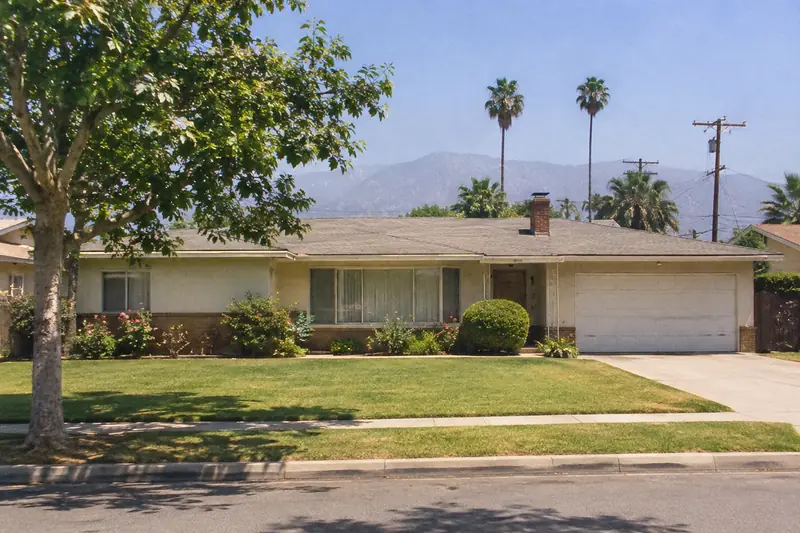
The Valley built a lot of ranch houses in a short time. The Los Angeles Conservancy describes Devonshire Highlands, built 1955 to 1957, as some of the Valley's best postwar Traditional Ranch work, and City survey reports group Valley tracts under a "Ranch House Neighborhoods, 1938-1975" theme.
Many houses of this type sit on a concrete slab, often with water lines under or within it, frequently copper. Not all do. Some have crawlspaces or have been re-plumbed overhead, so check before assuming, and read the 1950s and 1960s page for how far a build date goes.
How do you check for a slab leak in the San Fernando Valley?
Start with the meter. EPA advises reading your water meter before and after a two-hour period when no water is being used. If it changes at all, you probably have a leak.
That test proves a leak, not a slab leak. A running toilet or a leaking sprinkler line will move the meter just the same, so rule those out first.
- Check the toilets. EPA's method is food coloring in the tank; color in the bowl after 10 minutes means a leak.
- Look at faucets, the water heater's surroundings and outdoor hose faucets.
- Keep irrigation off, and note any ice maker or softener that cycles on its own.
- Do the two-hour meter reading with no one using water.
- If it still moves, call a licensed plumber and report what you ruled out.
Learn where your main shutoff is. LADWP's FAQ calls it the wheel valve, generally at the street side by the faucet closest to the meter. If water is coming up through a floor, closing it is reasonable.
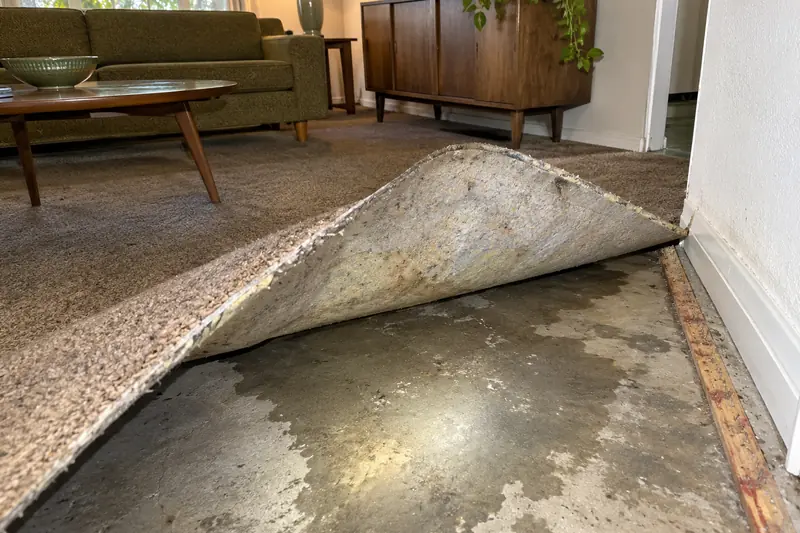
What are the signs of a slab leak?
No single sign settles it. Neither LADWP nor LADBS publishes a list that we could read, so what follows comes from trade guides, and a plumber should confirm it.
| Clue | Why it points to a slab leak | What else it could be |
|---|---|---|
| Warm patch on a floor | A hot water line may be heating the slab | Heat from a duct, or the sun on tile |
| Meter moves with all water off | Water is going somewhere | Toilet, irrigation, a yard line |
| Sound of running water at rest | Water moving under pressure | A toilet refilling or a neighbor's line |
| Damp carpet or lifted flooring | Water reaching the surface | Shower pan, supply riser, wall leak |
| A jump in the bill | Steady hidden use | Summer irrigation, a change in tier |
The warm spot may not be above the break, since water travels. Do not start cutting at the warm patch.
If there is water near electrical outlets or a wet floor by the panel, stay away and call a licensed professional. A smell of gas changes everything: leave first, leave the switches alone, and call 911 and SoCalGas from the sidewalk.
What does a slab leak cost on the water bill?
That depends on the size of the leak, and it can land in pricier tiers. Here is one example, as our own arithmetic. EPA puts 9 percent of homes at 50 gallons or more a day in leaks; at that rate, 60 days comes to 3,000 gallons, or about 4 HCF at LADWP's 748 gallons per HCF.
| Step | Number |
|---|---|
| Gallons | 50 × 60 = 3,000 |
| HCF | 3,000 ÷ 748 = about 4 |
| Cost at the lowest tier, Jul–Dec 2026 ($11.794) | 4 × $11.794 = about $47 |
That counts only the consumption charge at Tier 1. A higher tier costs more per HCF, and bills carry other charges; see the tiers and our high-bill check. LADWP's adjustment covers repaired underground leaks, decided by its Field Investigations Unit, as the high-bill story explains. Ask whether a slab leak counts, and keep your repair invoice.
The bigger worry is often not the bill. Steady water under a floor can damage what sits on it, so ask your insurer what is covered.
Should you repair the slab leak or reroute the line?
That is a judgment call for a licensed plumber who has located the leak. A spot repair opens the floor at one place. A reroute leaves the old line in the slab and runs new pipe through walls or overhead.
| Question | Spot repair | Reroute |
|---|---|---|
| What gets opened? | Floor and slab at the leak | Walls, ceilings or attic |
| What remains? | The rest of the old line | The old line, abandoned in place |
| What should you ask? | Is the pipe sound on each side of the break? | Where does the new run go, and is it insulated? |
| Heat concerns? | Mainly noise and dust | New pipe in a hot attic; see attic heat |
Ask about a second leak in a line of the same age, and get the plumber's reasoning in writing. Opening concrete is licensed work, partly because other lines may be in that slab.
Does a reroute need a permit?
Plan on asking, because the answer depends on the size of the job. In the City of Los Angeles, the express list covers underground water pipe of matching size and material.
A Certified Licensed Contractor can handle runs under 50 feet within that program. Nobody we read confirms a long reroute as express, so ask LADBS, and see our permit notes and repiping story. Keep the final inspection card; a later buyer may ask.
What this means by age of house
- Before 1930Usually raised floors rather than slabs, so a leak may be reachable from a crawlspace. Slab additions are the exception to check.
- 1930s–1940sOften raised foundations, with slab rooms added later in some houses. Galvanized leaks show up differently; see galvanized pipe.
- 1950s–1960sThe core case: ranch houses, often with copper at or below the slab, around 60 to 70 years old if never replaced.
- 1970s and newerSlabs are common and pipe materials vary. A line in the slab can still leak, and the same meter check applies.
On your street
- The Valley LADWP serves the City's Valley neighborhoods, from Chatsworth to North Hollywood; see the Valley edition.
- Pasadena, Glendale, Burbank Bills and rates belong to each city's own utility, though the meter test works anywhere.
- South L.A. & Inglewood Slab rooms and later additions are the likely place to look on older lots, and your edition covers the rest.
Who handles this
Questions that come up
Is finding a slab leak destructive?
Often not, but the repair may be. Ask how the leak will be located, and get the spot marked on a floor plan.
How much water can you use while waiting?
If water is surfacing or the meter is racing, close the wheel valve between uses. For a slow leak, ask the plumber.
Does LADWP locate slab leaks?
We found no such service. Its rebate program can help with a leak monitor, up to $150.
Would a monitor catch a slab leak?
They watch flow, so a steady flow in an idle house should stand out. The rebate is for single-family customers with Wi-Fi, not units on the utility meter.
What this was checked against
- Meter and toilet tests: EPA WaterSense
- Wheel valve: LADWP
- Rates, and gallons per HCF: Residential rate page
- Express and certified contractor bulletins: LADBS
- Devonshire Highlands and Devonshire Country Estates: Los Angeles Conservancy
Sources read in November 2026. Rules and prices change: check the agency before you act.